
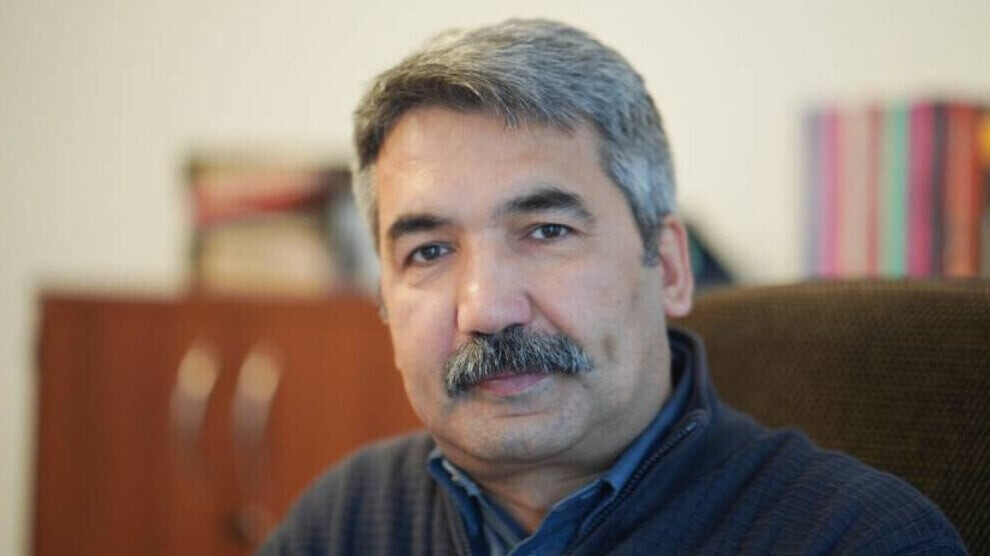
Mahmut Şakar, lawyer and member of the association MAF-DAD, said that legal changes in Turkey should be monitored for compliance with international law and involve the Venice Commission
The Council of Europe’s Committee of Ministers, during its September 2025 session, referred to the parliamentary commission established within the Turkish Grand National Assembly to draft regulations concerning the “right to hope,” as outlined in the “Gurban Group of Cases.” This group includes the Öcalan (No. 2) judgement issued by the European Court of Human Rights (ECtHR) in 2014 regarding Abdullah Öcalan, as well as the separate rulings concerning Hayati Kaytan, Civan Boltan, and Emin Gurban, all of which remain unimplemented by the Turkish state.
It is reported that the “National Unity, Brotherhood and Democracy Commission” in the Turkish Parliament is about to finalize its work, reaching the stage of legislative amendments related to the process initiated by Öcalan’s Call for Peace and a Democratic Society on February 27.
However, the anticipated legal amendments concerning the Kurdish issue in Turkey raise significant concerns, considering past practices. In particular, Turkey’s Anti-Terror Law, Execution Law, Penal Code, and related constitutional provisions remain problematic in terms of compliance with the European Convention on Human Rights (ECHR).
Mahmut Şakar, Co-Chair of the Association for Democracy and International Law (MAF-DAD), spoke to ANF about the importance of ensuring that any prospective legal changes fully align with the ECHR.
Why is the involvement of international mechanisms important for ensuring Abdullah Öcalan’s physical freedom?
First of all, let me say this: there has always been a political background to the legal issues concerning Mr. Öcalan. The main reason he is held under a special system on Imrali Island is precisely this. In other words, a regime and model that are distinctly different, administratively and legally from the rest of Turkey are being applied in relation to Mr. Öcalan.
From this perspective, the involvement of international mechanisms is always crucial in order to bring about change there, to ensure the protection of Mr. Öcalan’s fundamental rights, and to make the judgments of the ECtHR concerning him effective in practice.
Indeed, the Imrali model itself was constructed with the approval of Europe, and from the very beginning, Europe has remained part of the Imrali process. In this respect, there is a direct connection.
Turkey is a party to the ECHR, yet it violates it and refuses to implement the ECtHR rulings, first in relation to Öcalan and later in the cases of Selahattin Demirtaş and Osman Kavala. How should this attitude be understood?
In the end, Turkey has for a long time had a fluctuating relationship with Europe. It is one of the founding members of the Council of Europe. So, there is a dual position: on the one hand, Turkey is part of the European mechanism; on the other hand, it maintains an attitude of distancing itself from implementing the judgments of the European Court of Human Rights and from complying with other mechanisms and treaty provisions.
In other words, there is a reality of a Turkey that wants, in one way or another, to be part of Europe and that has a historical bond with Europe, but at the same time wants to remain outside the European Union, outside European law, and outside the human rights tradition in Europe.
What role could Europe play in a possible change?
I believe Europe’s role is important in creating change in Turkey. The role of European institutions is significant in encouraging change in Turkey, in helping it evolve toward a democratic legal order, and especially in creating change with regard to Mr. Öcalan. Our main criticism until now has been that these institutions have not fulfilled that role.
We have criticisms directed at the CPT (Committee for the Prevention of Torture) and at the Committee of Ministers of the Council of Europe. These are already known realities. But as a lawyer, as someone who has worked in the core of this process, we are trying to use all of the international avenues available to us, especially those of the Council of Europe, because the Council of Europe is the central institution in Europe of which Turkey is a member.
I believe it is important to use those avenues in depth through the bodies of the Council of Europe to end the isolation imposed on Mr. Öcalan, to secure the use of the “right to hope” for Mr. Öcalan, and to achieve his liberation.
Up to now, a diplomatic struggle has been carried out alongside the legal struggle. On many issues the conditions in which Mr. Öcalan is being held, the unlawful practices against him, the failure to implement court judgements the other mechanisms of the Council of Europe have been informed. We try to remain in regular contact with these mechanisms.
From this perspective, I consider it important that the mechanisms of the Council of Europe be used in this matter. Especially in a period like this in this recent process in which Turkey is, however slowly, addressing the Kurdish question and in which a democratic solution is being envisaged, I believe this becomes even more important.
We also see initiatives from the European Union in such relatively moderate periods in Turkey–European Union relations. In periods of open conflict, Turkey’s relationship with European mechanisms weakens. But in periods when a democratic and peaceful resolution of the process is being envisaged or at least being attempted and when clashes partially subside, Turkey–European Union relations tend to move to a more positive point.
At the very least, the relationship becomes somewhat stronger; Turkey comes closer to Europe.
For example, experts from the Venice Commission, founded in 1990 as an advisory body of the Council of Europe, have stated that if Turkey were to formally request the opinion of the Venice Commission, the reform process could be moved onto a more reliable footing in line with Council of Europe standards. As a lawyer, what is your view?
I believe it is important for the Venice Commission, as an advisory body of the Council of Europe that helps to establish a legal framework and shed light on the law in Turkey, to become involved in Turkey’s current process, especially in the situation of Mr. Öcalan.
One of the essential issues here is this: First, there is a judgment of the ECtHR concerning Mr. Öcalan, and this judgment concerns the “right to hope.” It found that the sentence imposed is unlawful and that it violates the prohibition of torture under the ECHR. This entire process is already proceeding on the basis of that judgment. As we also saw in the decision of the Committee of Ministers, there is a structural reason behind it. That structural reason lies in Turkey’s own legislation in problems within the legal framework, from the Execution Law to other laws.
Therefore, I consider it important for the Venice Commission to issue a report on the nature of these legal arrangements. Of course, the Court has already ruled that the legal background is contrary to the Convention; it has stated that this sentence is incompatible with the Convention. But I also consider it important that the very laws on which that sentence is based be examined by an expert body grounded in the logic of the ECHR, and that this examination be formalized in a report.
If, in this process, there is going to be any development regarding the right to hope that is, if there is going to be a development arising from the process referred to by the Committee of Ministers in its last decision, which involves the Parliamentary Commission, then legal changes must be made.
It is important that the nature of those legal changes be monitored, tested, and assessed for compatibility with the Convention. In other words, even if there is an intention to amend the law, what that amendment will look like, its nature, its character, is crucial.
To be a party to this process, to monitor this process, is important for us as lawyers and also at the international level, especially in terms of European law. From this perspective, it is valuable for an expert body such as the Venice Commission to be in motion in such a way that it can monitor any possible legal amendment. It is necessary to monitor both the assessment of the current situation and the compatibility of any future change with the spirit and logic of the Convention. I believe it is important to activate both of these dimensions.
From both of these angles, especially in terms of the resolution process, the possible developments in Turkey–European Union relations, and the deeper use of the Council of Europe’s mechanisms, I view the activation of the Venice Commission as a positive step.
As a method, beyond merely applying to the ECtHR or following the supervision of the Committee of Ministers, we have held and continue to hold numerous meetings with parliamentarians, with the committees that make up the Council of Europe, and with permanent representations.
As much as we can, we are trying to convey to as broad an audience as possible the situation concerning Mr. Öcalan, what needs to be done, and how securing his freedom would affect the process of peace and a democratic society. Part of our work has been to spread this reality to wider circles and to ensure that they, too, act within their own areas.
As part of this, if the Venice Commission can be set in motion through political channels, then as part of this approach and strategy, I believe its involvement, as a party both in determining the situation Mr. Öcalan is in and in any possible future developments would make a meaningful contribution.